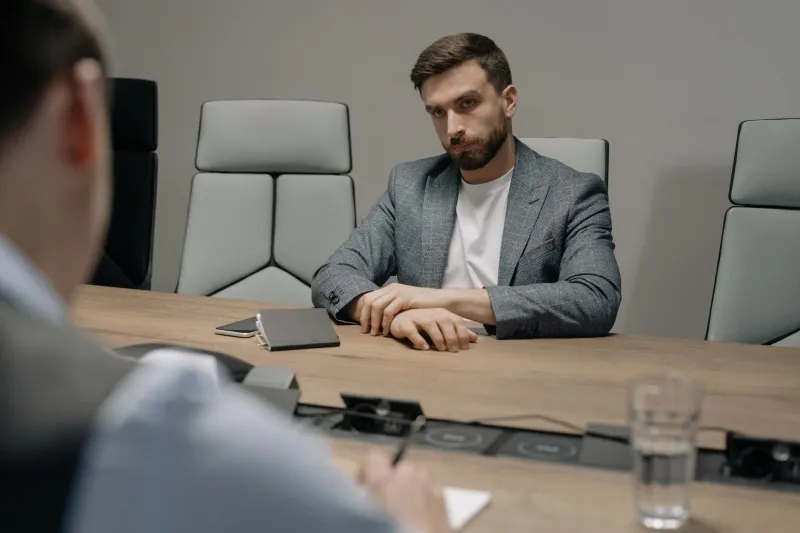
Deals Are Won or Lost in the Opening Exchange: Reengineering Your Team's First Sales Conversation

Deals Are Won or Lost in the Opening Exchange: Reengineering Your Team's First Sales Conversation
There is a persistent myth in B2B sales: that deals are decided at the close. That the skilled negotiator, the well-crafted proposal, or the perfectly timed follow-up is what separates won business from lost. Experienced sales leaders know better. The outcome of most B2B engagements is shaped far earlier — often within the first fifteen minutes of the first substantive conversation a prospect has with your team.
This is not a comfortable truth. It means that closing workshops, objection-handling scripts, and proposal templates — however refined — are largely remedial investments. They address the wrong end of the problem. If your sellers are losing credibility in the opening exchange, no amount of downstream technique will recover it.
Why the Opening Conversation Carries Disproportionate Weight
Sophisticated buyers — the kind who control meaningful B2B budgets — are pattern-recognition machines. They have sat through hundreds of vendor conversations. They know what a low-quality sales interaction feels like within minutes of it starting. And once that impression forms, it is remarkably difficult to reverse.
Cognitive science supports this. The primacy effect — the well-documented tendency for first impressions to anchor all subsequent evaluation — operates powerfully in professional settings. When a prospect decides, consciously or not, that your representative lacks authority or preparation, every subsequent statement gets filtered through that lens. A strong proposal becomes "decent for what it is." A competitive price becomes "probably hiding something." The seller is fighting uphill for the remainder of the engagement.
Conversely, when the opening exchange signals genuine expertise and disciplined curiosity, prospects extend trust. They share more. They engage more seriously. The conversation shifts from vendor evaluation to collaborative problem-solving — which is precisely the dynamic that produces closed deals.
The Specific Mistakes That Destroy Early Credibility
Most opening conversation failures fall into a handful of recognizable patterns.
The feature monologue. Many sales representatives open by describing their company and its capabilities at length — often before asking a single question. This signals that the seller is more interested in talking than in understanding. Sophisticated buyers interpret this as inexperience at best and indifference at worst.
Premature rapport theater. The forced small talk — the weather, the local sports team, the obligatory "how's your week going" — reads as scripted and hollow to busy executives. Genuine rapport is built through demonstrated competence and relevant insight, not performative friendliness.
Undifferentiated discovery questions. Questions like "Can you tell me about your current process?" or "What are your biggest challenges right now?" are so generic that they signal a lack of preparation. They communicate that your team did not think carefully about this prospect before showing up. Buyers notice.
Premature solutioning. The impulse to connect a prospect's first stated problem to your offering — before the full picture has been explored — is one of the most common and most damaging habits in B2B sales. It collapses the diagnostic space and positions the seller as transactional rather than consultative.
Absence of a stated agenda. Walking into a first conversation without declaring its purpose and structure signals disorganization. Buyers are left wondering what this call is actually for, which creates ambient unease that undermines everything that follows.
A Framework for the First Fifteen Minutes
Reengineering the opening conversation is not about scripting every line. It is about establishing a deliberate structure that communicates competence from the first exchange. The following framework has proven effective across a range of B2B contexts.
Open with a declared agenda. Within the first sixty seconds, state clearly what this conversation is intended to accomplish and why that structure serves the prospect. Something as direct as: "I'd like to spend the first part of this conversation understanding your situation in some depth — then, if it seems relevant, share a perspective on how we approach this kind of problem. Does that work for you?" This signals organization, respect for the prospect's time, and a consultative orientation.
Lead with a calibrated insight, not a question. Before asking anything, offer one well-researched observation about the prospect's business, industry, or competitive context. This demonstrates preparation and establishes you as someone worth talking to. The insight does not need to be dramatic — it needs to be specific and accurate. Generic observations do more harm than none at all.
Ask questions that reveal thinking, not just information. The best discovery questions in an opening conversation are ones that no one without domain expertise would think to ask. They signal that your team understands the category deeply. Questions tied to second-order consequences, organizational dynamics, or strategic tradeoffs communicate more credibility than any capability presentation.
Resist the solution reflex. When a prospect describes a challenge, the instinct to connect it immediately to your offering must be consciously suppressed. Instead, go deeper: "That's worth understanding more fully — what's driving that dynamic on your end?" Depth of inquiry is itself a form of value delivery, and it produces far richer information to work with later in the process.
Close the opening with a clear next step. Before the first conversation ends, establish what happens next and why. A vague "I'll send some information over" is a credibility leak. A specific commitment — "Based on what we've covered, the logical next step is X. Here's why that makes sense at this stage" — reinforces the consultative authority you have been building throughout.
The Organizational Implication
For sales leaders, the practical implication is clear: the highest-leverage coaching investment is not objection handling or negotiation tactics. It is the opening conversation. Record first calls. Review them with your team. Build shared standards for what a credible, well-structured opening exchange looks and sounds like. Measure not just whether calls are being booked, but what quality of impression is being created in those first critical minutes.
At Leads Consult, we work with B2B organizations to diagnose precisely where in the acquisition process deals are being lost — and for many of our clients, the answer is far earlier than they expected. The close is often a symptom. The opening conversation is frequently the cause.
If your pipeline looks healthy on paper but conversion rates remain stubbornly flat, consider the possibility that the problem is not your offer, your pricing, or your proposal. Consider that your team may be losing the deal before the deal has even properly begun.